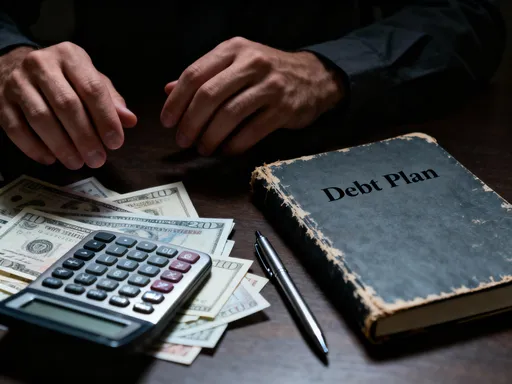
How I Took Control of My Debt—And What It Taught Me About Real Money Management
What happens when your monthly payments eat up everything—and then some? I’ve been there. It felt like running on a treadmill with no off switch. Each paycheck disappeared before the next bill cycle even began, and the stress became a constant companion. But breaking free wasn’t about earning more; it was about managing what I already had. This is the story of how I restructured my finances, paid off what I owed, and discovered the true meaning of financial control—all through practical, no-nonsense money management. It wasn’t glamorous, but it worked. And if I could do it, so can you.
The Breaking Point: When Debt Starts Calling the Shots
There’s a moment—quiet, almost imperceptible—when debt stops being a background issue and starts calling the shots. For me, it came when I opened my bank app and saw a negative balance despite having just been paid. My breath caught. I had planned to cover the electric bill that day, but now even groceries were in question. That was the wake-up call. I wasn’t overspending on luxury items or dining out every night. I was a single parent working full time, paying rent, childcare, and medical co-pays. But life had thrown a series of unexpected costs: a car repair, a dental emergency, and a temporary work furlough. Each one chipped away at my savings until there was nothing left to fall back on. I started using credit cards just to stay afloat, telling myself it was temporary. But the balances grew faster than I could manage.
The emotional toll was just as heavy as the financial one. I began avoiding my mailbox, dreading the sight of envelopes with credit card logos. I stopped checking my bank account unless absolutely necessary. There was a deep sense of shame—like I had failed at something fundamental. I compared myself to others who seemed to have it together, not realizing many were struggling silently too. Sleep became elusive, my mind racing through worst-case scenarios: What if I missed a payment? What if my car broke down again? What if my child got sick? The constant anxiety eroded my confidence and made it harder to think clearly about solutions. I realized then that financial stress isn’t just about numbers—it’s about dignity, peace of mind, and the ability to care for those who depend on you.
What helped me break through was accepting that the problem wasn’t moral failure or laziness. It was a systems failure. I didn’t have a clear picture of my finances, no buffer for emergencies, and no strategy for prioritizing my debts. Recognizing that shift—from self-blame to problem-solving—was the first real step toward change. I wasn’t broken; my financial approach was. And that meant it could be fixed.
Mapping the Terrain: Understanding Where Every Dollar Goes
Before you can fix a problem, you have to see it clearly. For months, I had been making minimum payments, hoping things would improve on their own. But progress was invisible. I needed a full financial snapshot—honest, detailed, and free of denial. I started by listing every debt I owed: two credit cards, a personal loan, a medical bill, and my student loans. For each, I recorded the balance, interest rate, minimum monthly payment, and due date. The total came to just over $27,000. Seeing it in black and white was painful, but also clarifying. No more guessing. No more avoiding.
Next, I tracked every dollar coming in and going out for a full month. I used a simple spreadsheet—no fancy apps, just columns for date, category, amount, and notes. I categorized expenses: housing, utilities, groceries, transportation, childcare, insurance, subscriptions, and discretionary spending. At first, I was surprised by how much I spent on things I barely remembered—automatic renewals, convenience store stops, delivery fees. I wasn’t living extravagantly, but small leaks were draining my budget. My monthly income was about $4,200 after taxes. My fixed expenses—rent, insurance, phone, loan minimums—already took up $3,100. That left $1,100 for everything else: food, gas, clothing, and occasional extras. But I was consistently spending $1,400 in that category, which explained why I kept falling behind.
The exercise wasn’t about shame; it was about awareness. I wasn’t bad with money—I was just flying blind. Once I had the full picture, I could make informed choices. I saw that my two credit cards had interest rates of 23% and 26%, which meant every dollar I didn’t pay off was growing more expensive by the month. I also noticed that some bills, like my internet and phone plan, were higher than market rates. I wasn’t locked into bad deals—I just hadn’t taken the time to compare. Knowledge became power. I wasn’t trying to eliminate all spending; I wanted to redirect it strategically. With a clear map of my financial terrain, I could start planning the route out.
The Power of Prioritization: Not All Debt Is Created Equal
When you’re drowning in debt, it’s tempting to attack every balance at once. But not all debt is equally dangerous. Some carry high interest that compounds quickly, while others have manageable rates and predictable terms. I learned that throwing equal amounts at each debt could actually cost me more in the long run. The key was prioritization—focusing first on what was costing me the most.
My highest-interest debt was a credit card with a $6,200 balance and a 26% annual rate. Left alone, the minimum payment would have kept me paying for over 20 years, with thousands in interest. That had to be my top priority. Next was another card at 23%, followed by a $5,000 personal loan at 11%. My student loans, while large in total, had a 5.8% rate and flexible repayment options, so they could wait. This hierarchy wasn’t based on emotion—it was based on math. By focusing on high-cost debt first, I could reduce the total interest I’d pay and free up cash faster.
I also resisted the temptation to chase small balances just for the psychological win. I knew someone who paid off a $300 store card first because it felt good to “clear one debt.” But that left her with a $7,000 credit card balance at 24%—a much bigger drain. I respected the emotional benefit of quick wins, but I couldn’t afford them. My strategy was the avalanche method: pay minimums on all debts except the highest-interest one, then throw every extra dollar at that priority balance. Once it was gone, I’d roll that payment into the next target. It wasn’t flashy, but it was effective. I calculated that by following this approach, I could save over $4,000 in interest compared to making only minimum payments.
Cash Flow Engineering: Making the Most of What You Have
Money management isn’t about luck or sudden windfalls. It’s about making small, consistent adjustments that add up over time. I couldn’t increase my income overnight, but I could optimize how I used what I already had. This meant engineering my cash flow—aligning timing, reducing costs, and redirecting funds without drastic lifestyle changes.
The first step was syncing my bill due dates with my pay schedule. I got paid on the first and fifteenth of each month. But most of my bills were due in the first week, which meant I was often short on the second half of the month. I called my credit card issuer, my phone company, and my loan servicer and requested due date changes. All three agreed to move my payments to the second or third of the month. That gave me breathing room and prevented late fees. It also allowed me to make larger lump-sum payments when I had the funds, rather than spreading small amounts thin.
Next, I reviewed recurring expenses. I switched my internet provider to a lower-tier plan that still met my needs—saving $28 a month. I canceled two subscription services I rarely used. I started buying generic groceries and planning meals weekly to reduce waste. These weren’t huge sacrifices, but together they freed up about $220 a month. I also negotiated my car insurance by shopping around and increasing my deductible slightly, saving another $40 monthly. I redirected every dollar saved straight into my debt repayment fund.
I also started using windfalls wisely. When I received a $500 tax refund, I didn’t spend it on a vacation or new furniture. I put $400 toward my highest-interest card and kept $100 in a separate envelope for small emergencies. Over time, these disciplined choices created momentum. I wasn’t living with less—I was living with more intention.
Building Shields, Not Just Ladders: The Role of Emergency Savings
One of the biggest reasons debt spirals out of control is the lack of a financial buffer. Every unexpected expense—a flat tire, a broken appliance, a doctor’s visit—becomes a crisis that must be charged or borrowed against. I realized I couldn’t just climb out of debt; I had to protect myself from falling back in.
Many financial experts suggest paying off all debt before saving. But I found that unrealistic. Without any savings, one emergency could wipe out months of progress. So I adopted a hybrid approach: while aggressively paying down high-interest debt, I also began building a small emergency fund. I started with just $20 a month—barely noticeable in my budget. I kept it in a separate savings account I couldn’t easily access. Over six months, I reached $500. It didn’t seem like much, but it was enough to cover a car repair or an urgent medical co-pay without using a credit card.
This small shield changed everything. When my washing machine broke, I didn’t panic. I used $300 from my emergency fund and paid the rest in cash over two weeks. No new debt. No stress. That experience reinforced the value of protection. I continued adding to the fund until it reached $1,000. Then I paused and focused fully on eliminating my remaining balances. Now, I maintain that emergency cushion as a permanent part of my financial plan. It’s not about having a lot—it’s about having enough to prevent setbacks.
Tools Over Tricks: Using Systems That Work Long-Term
Motivation fades. Willpower fails. But systems endure. I learned that lasting financial change doesn’t come from intense short-term effort—it comes from reliable, repeatable processes that work even when life gets busy.
I set up automatic payments for all my bills, including my debt repayments. I scheduled them a few days after each payday, ensuring funds were available. For my priority debt, I set up an additional automatic transfer of $150 from checking to a debt repayment account each month. That money was then used to make extra payments whenever possible. Automation removed the mental load of remembering due dates or deciding how much to pay. It also eliminated the risk of late fees, which had previously added hundreds to my annual costs.
I also used a simple debt tracker—a printable chart I kept on my fridge. Each month, I filled in the current balance and shaded a bar to show progress. Watching the red bar shrink was incredibly motivating. It turned an abstract goal into a visible journey. I didn’t rely on apps with complex features; I used tools that fit my life, not the other way around.
Another key system was separation. I opened a second checking account just for bills and debt payments. Each payday, I immediately transferred the exact amount needed for fixed expenses and debt into that account. The rest went to my primary account for daily spending. This prevented me from accidentally overspending on groceries or gas and missing a payment. It was like paying myself first—but for obligations. These systems didn’t require perfection. They just needed consistency. And over time, they built trust—in myself and in my plan.
From Survival to Strength: How Debt Management Builds Financial Confidence
Paying off debt isn’t just about numbers disappearing from a statement. It’s about reclaiming control, restoring peace, and building confidence that extends far beyond money. When I made my final payment on my last credit card, I didn’t celebrate with a shopping spree. I sat quietly, looked at my budget, and realized something profound: I wasn’t afraid anymore.
The journey taught me that financial health isn’t about how much you earn, but how you manage what you have. I developed habits that stuck—tracking spending, planning ahead, making intentional choices. My credit score improved, opening doors to better loan terms and lower insurance rates. I started saving for goals I once thought impossible: a family vacation, a new car, even retirement contributions.
More than that, I gained emotional resilience. I no longer panic at the sight of an unexpected bill. I know I have systems in place, a buffer to fall back on, and the skills to adapt. I talk openly with my child about money—not with anxiety, but with honesty and empowerment. I’ve helped friends create budgets, review bills, and start their own debt payoff plans. What began as a personal crisis became a source of strength.
Financial control isn’t a destination. It’s a practice. It’s choosing clarity over avoidance, systems over stress, progress over perfection. I didn’t need a raise or a miracle. I needed a plan, the courage to start, and the discipline to keep going. And now, for the first time in years, my treadmill has an off switch. I’m not just surviving. I’m moving forward—with purpose.